Age of Empires IV review: A careful, confident homecoming
Age of Empires IV asks the right question every match and dresses its thinner launch content in excellent production.

The Scorecard
Every match of Age of Empires IV opens with the same quiet interrogation, and the game is polite enough to make you answer it in the first three minutes. When do I age up? Do I bank my resources toward a faster technology spike, or do I spend that same economy on early pressure and try to end the game before my opponent gets comfortable? That is the core decision, and I find it genuinely interesting because the two answers are never equally correct. Aging up is an investment against the future; harassing now is a bet on the present. The elegant part is that both paths route through the same wood and gold, so every villager you make is a small argument about which kind of game you intend to play. Relic understood that a real-time strategy game lives or dies on this tension, and here the tension has weight. The opportunity cost is legible. You can feel the tempo of a match tighten or slacken depending on how honestly you answered that opening question.
The economy is where the confidence shows. Resource gathering is clean, drop-off distances matter, and the tech tree, while leaner than the sprawling monster that Age of Empires II eventually became, is coherent enough that build orders reward memory and punish improvisation. The eight launch civilizations are the real argument for depth. These are not palette swaps. The Mongols pack up their buildings and relocate, which turns their whole economy into a mobile question mark. The Abbasid Dynasty tech through a single House of Wisdom that reorganizes how you think about upgrades. The Rus turn hunting into a genuine gold engine. That asymmetry is where the strategic depth actually lives, because learning one civilization does not automatically teach you the next. Each one bends the standard build order into a slightly different shape, and the macro payoff is that mirror matches feel rare and cross-civ matches feel like puzzles. My only complaint is that the streamlining sometimes reads as caution. There are fewer units and fewer technologies than a veteran expects, and occasionally I wanted one more meaningful choice where the design handed me none.
The opposition is a more complicated grade. The skirmish AI is a real improvement over what the series shipped before, and for a casual player it holds up as a sparring partner that at least remembers to build an army and expand. The information the game gives you is admirably clear. Unit health, upgrade states, and production queues are readable at a glance, which matters because counterplay depends on knowing what is coming. But the honest pushback is that the AI is exploitable. Once you learn a reliable opening, the computer stops surprising you, and the challenge quietly evaporates. It does not adapt so much as execute, and a decision space is only as sharp as the mind pushing back against you. Against other people the game finds its real teeth, and the balance patches over time have kept civilizations from snowballing into one another. But at launch, the single-player challenge asked less of me than I wanted it to.
This is the point where I have to separate strategy from busywork, and Age of Empires IV lands cleaner than most. The campaigns are the genuine surprise. They are staged as historical documentaries, with narrated real-world footage stitched between missions, and the effect is far more compelling than a strategy campaign has any right to be. Critics rightly praised this, and I agree it is the standout. The catch is that many missions underneath the documentary polish are ordinary skirmishes against that same exploitable AI, so the presentation is doing heavy lifting that the objectives do not always earn. The multiplayer is where the strategy is real and durable. The launch content was thin by the standards of a decades-old franchise, fewer civilizations and smaller maps than the faithful expected, and the art direction drew fair criticism for looking competent rather than exciting. None of that is padding exactly, but it is a game that shipped lean and trusted its fundamentals to carry the weight.
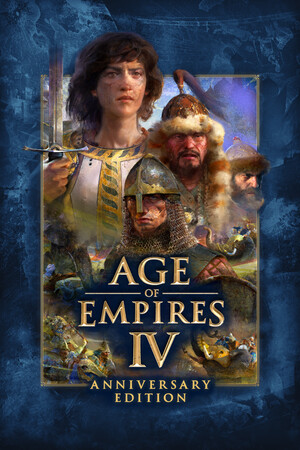
So here is the calculus. Age of Empires IV is a careful, confident homecoming that gets the important decision right and dresses its weaker moments in excellent production. The consensus reflects this honestly, an 84 on Metacritic and a strong 83 on OpenCritic with better than four in five critics recommending it, and I do not find that number generous or stingy. The core decision is sharp, the economy is disciplined, the civ asymmetry is the real depth, and the campaigns are a treat. The costs are a thin launch roster, an AI that folds once you read it, and a visual identity that plays it safe. Who is it for? It is for the strategy player who wants a clean, legible decision space over baroque complexity, and for anyone curious enough to let a history documentary teach them a build order. Veterans chasing the sprawl of Age of Empires II should temper expectations. Everyone else should age up.